Overfishing has been a growing problem around the world for years now and it happens when too much fish is caught at once that it’s hard for the breeding population to replenish its stocks.
The earth as we know it has more water than land. In fact, the ocean covers more than 70% of the planet’s surface that it’s easy to assume that it has unlimited resources.
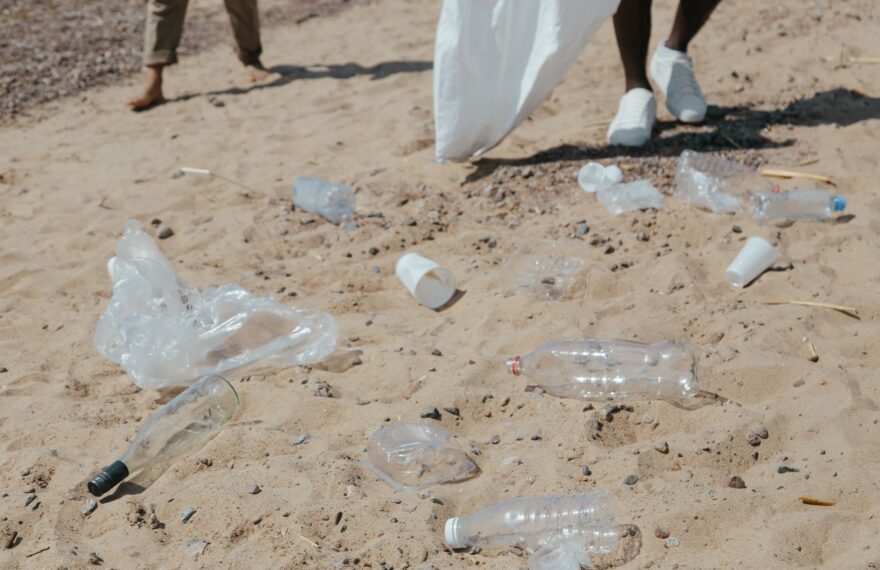
The problem with plastic waste has long been a cause of debate for many countries around the world. But while several efforts have been made to help lessen the world’s waste, hundreds of sharks and rays are still dying.
Currently, 316 million plastic drink stirrers, 4.7 billion plastic straws and 1.8 billion plastic-stemmed cotton buds are used in England each year. But starting April 2020, the government plans to eradicate the usage of these plastic products by restricting their availability.
Climate change has had a startling effect on the rising temperatures of the oceans. Scientists predict that water temperatures will hit 1.4 – 5.8◦c by the end of the century. This change in the weather and ocean temperature is having a fundamental effect on the marine life that depends on it.
In 2018, no whale calves were spotted in their breeding ground off the Florida and Georgia coasts. It wasn't until the end of December when the first calf was spotted and a total of 7 more were seen afterward.
A fishing charter that works just off of the coast of New Zealand got a life-changing experience as they found themselves dealing with a Great White Shark.
Another mysterious wave of dead sea animals has washed ashore in Peru, the possible consequence of radiation releases from the nuclear facility in Japan.
We use cookies on our website to give you the most relevant experience by remembering your preferences and repeat visits. By clicking “Accept All”, you consent to the use of ALL the cookies. However, you may visit "Cookie Settings" to provide a controlled consent.
This website uses cookies to improve your experience while you navigate through the website. Out of these, the cookies that are categorized as necessary are stored on your browser as they are essential for the working of basic functionalities of the website. We also use third-party cookies that help us analyze and understand how you use this website. These cookies will be stored in your browser only with your consent. You also have the option to opt-out of these cookies. But opting out of some of these cookies may affect your browsing experience.
Necessary cookies are absolutely essential for the website to function properly. These cookies ensure basic functionalities and security features of the website, anonymously.
Cookie
Duration
Description
cookielawinfo-checkbox-analytics
11 months
This cookie is set by GDPR Cookie Consent plugin. The cookie is used to store the user consent for the cookies in the category "Analytics".
cookielawinfo-checkbox-functional
11 months
The cookie is set by GDPR cookie consent to record the user consent for the cookies in the category "Functional".
cookielawinfo-checkbox-necessary
11 months
This cookie is set by GDPR Cookie Consent plugin. The cookies is used to store the user consent for the cookies in the category "Necessary".
cookielawinfo-checkbox-others
11 months
This cookie is set by GDPR Cookie Consent plugin. The cookie is used to store the user consent for the cookies in the category "Other.
cookielawinfo-checkbox-performance
11 months
This cookie is set by GDPR Cookie Consent plugin. The cookie is used to store the user consent for the cookies in the category "Performance".
viewed_cookie_policy
11 months
The cookie is set by the GDPR Cookie Consent plugin and is used to store whether or not user has consented to the use of cookies. It does not store any personal data.
Analytical cookies are used to understand how visitors interact with the website. These cookies help provide information on metrics the number of visitors, bounce rate, traffic source, etc.