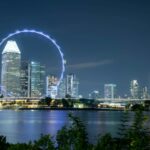
Every March, Singapore turns its attention outward — toward the sea, the ships that cross it, and the industries that depend on them. Singapore Maritime Week (SMW) has become one of the most influential gatherings in the global maritime calendar, bringing together policymakers, shipowners, port authorities, financiers, technology firms and start-ups for a week of focused discussion.
Rather than a single exhibition, SMW is a cluster of high-level conferences, forums and side events held across the city. The structure suits Singapore’s role in global shipping: connected, efficient, and firmly plugged into international trade.
👉 Registration and full programme details:
https://www.smw.sg/
Policy meets commercial reality
What distinguishes Singapore Maritime Week from many other industry gatherings is its balance between government leadership and commercial participation. Organised by the Maritime and Port Authority of Singapore (MPA) alongside industry partners, the event provides a platform where regulatory direction and market realities are discussed in the same room.
Topics typically range from decarbonisation pathways and fuel transition to digitalisation, maritime finance and supply chain resilience. The tone is pragmatic. Singapore has long positioned itself as a testing ground for new fuels and port technologies, and SMW often serves as the stage where pilot projects and collaborative initiatives are introduced.
For operators navigating emissions targets, alternative fuel readiness and reporting obligations, these discussions are not abstract. They shape investment decisions.
Decarbonisation at the centre
In recent years, sustainability has moved from panel discussion to operational agenda. Expect strong attention on green fuels, carbon intensity regulations, onboard efficiency technologies and port electrification. Singapore’s ambitions as a multi-fuel bunkering hub make these conversations particularly relevant.
Shipowners attending SMW are often looking for clarity: which fuels are realistically scalable, how infrastructure is developing, and how financing institutions are assessing transition risk. The presence of banks and insurers adds another dimension, reinforcing the link between environmental performance and capital access.
Digital transformation and AI
Beyond fuel transition, Singapore Maritime Week consistently addresses digital integration. Smart ports, data sharing platforms, cybersecurity, autonomous systems and AI-driven optimisation are recurring themes.
Singapore’s own port development projects — including Tuas Port — provide tangible context. Discussions are often grounded in real implementation rather than theory, which makes the event useful for technical managers and port planners seeking insight into what works at scale.
A week of connection
SMW is as much about relationships as it is about policy. The city’s compact layout and maritime focus mean meetings flow from formal conferences to evening receptions and industry roundtables with relative ease.
The diversity of attendees is notable. Asian shipowners, European technology providers, Middle Eastern energy companies and global regulators converge in one place. That mix makes Singapore Maritime Week particularly valuable for companies seeking international partnerships or entry into new markets.
Why it matters in 2026
Shipping is entering a period where regulatory pressure, fuel uncertainty and geopolitical shifts intersect. Events that combine policy, finance and operations under one umbrella are increasingly important.
Singapore Maritime Week continues to provide that space. It is not merely a showcase, nor simply a regulatory forum. It is a working meeting point for a sector adjusting to new expectations — environmental, technological and economic.
For maritime professionals watching the direction of global shipping, SMW 2026 offers a timely opportunity to listen, question and connect.