Marine Ecology News Digest – October 2025

A Month of Reflection Rather Than Revelation
October is usually the month when the sea looks calmer than it really is. The storms have not quite arrived, summer research vessels are heading home, and many of the year’s findings finally make their way out of spreadsheets and into conversations. What emerges is rarely dramatic. Instead, it is a slow assembling of truths — some encouraging, some awkward, and many unresolved.
This October, marine ecology has felt less about breakthroughs and more about confirmation. Patterns observed over the past few years are holding. In some cases, they are sharpening.
Ocean Temperatures: A Pause, Not a Turning Point
One of the most discussed topics this autumn has been ocean temperature. After a year dominated by records and superlatives, October brought a modest easing in parts of the North Atlantic and Southern Ocean. Some monitoring stations reported steadier readings than expected. A few headlines hinted at relief.
Most researchers were careful not to celebrate.
What is being observed looks less like recovery and more like a pause. Marine heatwaves remain common, particularly in shallow and enclosed seas. Kelp forests, long used as bellwethers of coastal health, continue to tell a complicated story. In some locations, particularly where local pressures are low, kelp has held on. Elsewhere, especially near developed coastlines, losses seen earlier in the year have not reversed.
What replaces lost kelp is often faster-growing, less structurally complex species. From an ecological perspective, this matters. Habitat does not simply disappear; it changes form, often becoming less stable and less useful for the many organisms that depend on it. October surveys suggest that this quiet reshaping of ecosystems may prove more significant than the headline temperature figures themselves.
Seagrass Restoration Comes of Age
Against this backdrop, restoration has featured prominently in this month’s discussions — and not in a glossy, promotional way. Seagrass projects, particularly in Europe, are beginning to mature. Some of the earliest experimental plots planted years ago are now large enough to influence local conditions. Water clarity improves. Sediment stays put. Fish behave differently.
What is notable is how restoration thinking has evolved. Early efforts were often optimistic to the point of naïveté: plant more shoots, hope for the best. Current projects are slower and more deliberate. Site choice, protection from anchoring, water quality, and long-term maintenance now dominate planning meetings.
The tone has shifted from “how fast can we restore?” to “how do we avoid doing this twice?”. It is a healthier mindset, even if it produces fewer immediate success stories.
Fisheries Management and the Value of Consistency
That realism is also visible in fisheries science. October brought several stock assessments that, on the surface, looked unremarkable. No sudden recoveries. No dramatic collapses either. In parts of the North Sea and North Atlantic, stocks managed under ecosystem-based approaches appear less volatile than in the past.
This does not mean problems are solved. Cod remains under pressure. Climate-driven shifts in distribution continue to complicate quota systems built around historical patterns. But there is a sense that management, where consistently applied, is beginning to dampen extremes.
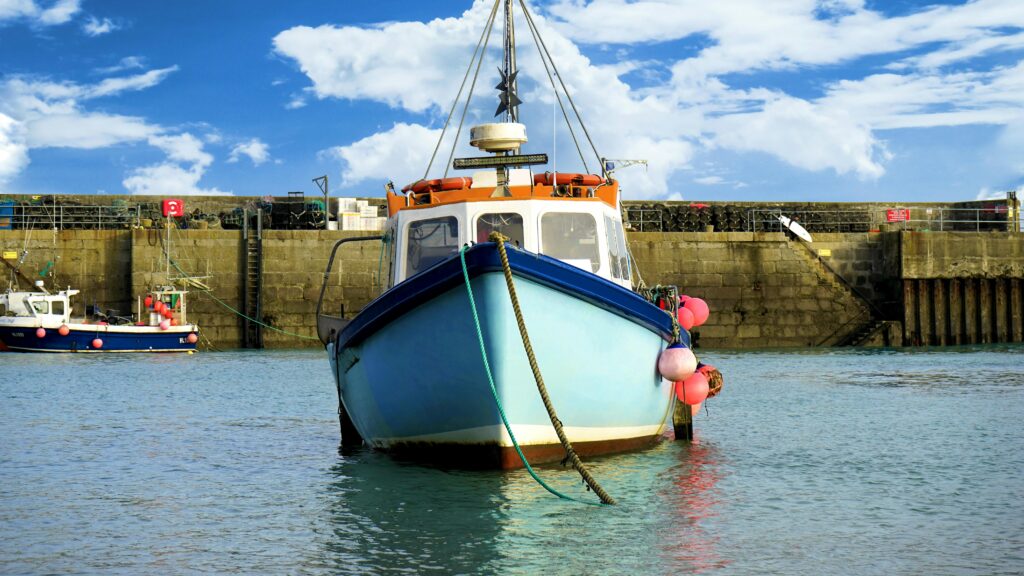
Perhaps more importantly, the relationship between scientists and fishing communities is changing, albeit slowly. Cooperative data collection programmes are expanding. Fishers contribute observations that do not appear in satellite data: unusual species, altered timing, subtle changes in behaviour. These inputs are not perfect, but they add texture to assessments that numbers alone cannot provide.
Elsewhere, the picture is less reassuring. Illegal and unreported fishing remains widespread, particularly in regions where enforcement capacity struggles to match technological monitoring. October reports confirm that detection is improving faster than deterrence — an uncomfortable imbalance that continues to undermine conservation gains.
Microplastics: From Shock to Understanding
Plastic pollution has also returned to the foreground this month, though without the shock value it once carried. Microplastics are now so widely documented that surprise has largely evaporated. What has improved is consistency. Sampling methods are becoming more standardised, allowing comparisons across regions that were previously impossible.
Recent studies point to predictable accumulation zones: shipping routes, river mouths, aquaculture areas. The plastics themselves vary — fibres, fragments, pellets — but their presence no longer raises questions of “if”, only “how much” and “what does it do over time?”.
That last question is where research attention is settling. Rather than chasing dramatic toxicity thresholds, scientists are examining chronic exposure. Slight changes in feeding efficiency. Minor disruptions to reproduction. Effects small enough to be dismissed individually, but potentially serious in combination with warming, acidification, and habitat loss.
This framing matters. It places plastic pollution alongside other long-term pressures rather than treating it as a standalone villain. The ocean, after all, does not experience problems one at a time.
Marine Protected Areas: More Than Lines on a Map
Marine protected areas have also been under scrutiny this October. Reviews of MPA effectiveness continue to show a familiar split. Where protection is clearly defined, enforced, and locally supported, ecological benefits are evident. Where MPAs exist largely on paper, results are thin.
What is changing is the willingness to admit this publicly. Several agencies have acknowledged that expanding coverage without funding enforcement creates a false sense of progress. In response, some pilot programmes are experimenting with lower-cost monitoring and community involvement, particularly in coastal zones.
These efforts are modest, but they recognise a simple truth: protection is a process, not a designation.
Coastal Communities and Living With Change
Perhaps the most human stories this month come from the coast rather than the open sea. Managed realignment, saltmarsh restoration, and nature-based flood defences are becoming more common topics in local planning meetings. In northern Europe especially, restored saltmarshes are proving their worth — reducing wave energy, storing carbon, and providing habitat in one relatively quiet intervention.
Where communities are involved from the start, opposition tends to soften. People are more willing to accept change when they understand its shape and purpose. Where decisions are imposed, resistance remains strong.
Globally, the imbalance persists. Many coastal communities facing the greatest risks still lack access to funding or technical support. October’s reports underline this gap without offering easy solutions. Awareness, it seems, is still running ahead of action.
Incremental Truths, Not Grand Conclusions
Taken together, October 2025 feels like a month of incremental truths. No silver bullets. No collapse narratives either. The ocean continues to respond to what we do, not what we promise.
Marine ecology, at its best, is patient work. It rewards consistency and punishes shortcuts. This month’s developments reinforce that lesson. The systems are stressed, but not silent. They are changing, sometimes slowly enough to notice, sometimes not.
The task ahead is less about finding new stories and more about staying with the ones already unfolding — listening carefully, acting deliberately, and resisting the urge to mistake pauses for turning points.
References
-
Intergovernmental Oceanographic Commission (UNESCO)
-
International Council for the Exploration of the Sea (ICES)
-
Marine Conservation Society (UK)
-
National Oceanic and Atmospheric Administration (NOAA)
-
European Environment Agency (EEA)
-
FAO – State of World Fisheries and Aquaculture
-
Peer-reviewed research from Marine Ecology Progress Series, Global Change Biology, and Frontiers in Marine Science