Marine Ecology 2025: A Year That Refused to Sit Still

There are years when marine ecology feels like a slow discipline. Data accumulates patiently, trends emerge cautiously, conclusions are hedged and footnoted. This was not one of those years.
Over the past twelve months, the ocean seemed less willing to wait. Changes that once unfolded over decades arrived compressed into seasons. Field teams returned from surveys unsettled rather than surprised. Conversations at conferences drifted away from “if” and settled firmly on “how much” and “how fast”.
It would be neat to describe the year as good or bad. It was neither. It was uneven, unsettling, and in places quietly revealing.
When Baselines Start to Slip
One of the least discussed but most significant shifts this year was the way scientists talked about baselines. Increasingly, phrases like historical average and expected range were replaced with something less precise: previous conditions, earlier records, what we used to see.
This wasn’t rhetorical. In many regions, especially those monitored over long periods, reference points simply stopped holding. Sea temperatures exceeded earlier thresholds so often that they ceased to feel exceptional. Seasonal patterns blurred. Some species arrived early, stayed late, or didn’t leave at all.
For researchers used to carefully bounded datasets, this created a kind of methodological unease. How do you measure recovery when the endpoint keeps shifting? What does resilience mean when the system itself is reconfiguring?
Heat in the Water, Stress in the System
Marine heat didn’t announce itself with drama. It accumulated quietly, week after week, spreading vertically as well as across the surface. In shallow coastal areas, the effects were immediate: altered behaviour, reduced oxygen, visible stress.
Further offshore and at depth, the signals were slower but no less concerning. Changes in plankton composition hinted at knock-on effects still unfolding. Fisheries surveys picked up mismatches between predator and prey that couldn’t be explained by fishing pressure alone.
This year made it harder to talk about climate impacts as future risks. They were present, measurable, and in some cases already reshaping management decisions.
Coral Reefs: Familiar Damage, Unexpected Holdouts
Coral reefs continued to bear the brunt of warming seas, but the story was not entirely uniform. While widespread bleaching events reinforced well-known vulnerabilities, there were also reports of reefs that held on against expectation.
These weren’t miracle recoveries. Mortality was still high. But survival in pockets once assumed to be lost forced a reassessment of assumptions. Local currents, shading, depth, and genetic variation appeared to matter more than previously credited.
What emerged was not optimism so much as precision. Conservation strategies based solely on broad geographic categories felt increasingly blunt. This year favoured detail: which reef, which conditions, which community.
For coastal populations dependent on reef health, this distinction mattered. Some communities faced sudden losses. Others clung to fragile stability. The difference often came down to factors far outside their control.
Fish on the Move
Fish did what fish have always done: they followed the water they needed. What changed this year was how visible — and politically awkward — those movements became.
Stocks long associated with particular regions appeared elsewhere with growing regularity. In some cases, this brought opportunity. In others, conflict. Existing management frameworks struggled to keep pace with species that did not respect maritime boundaries drawn for different climatic conditions.
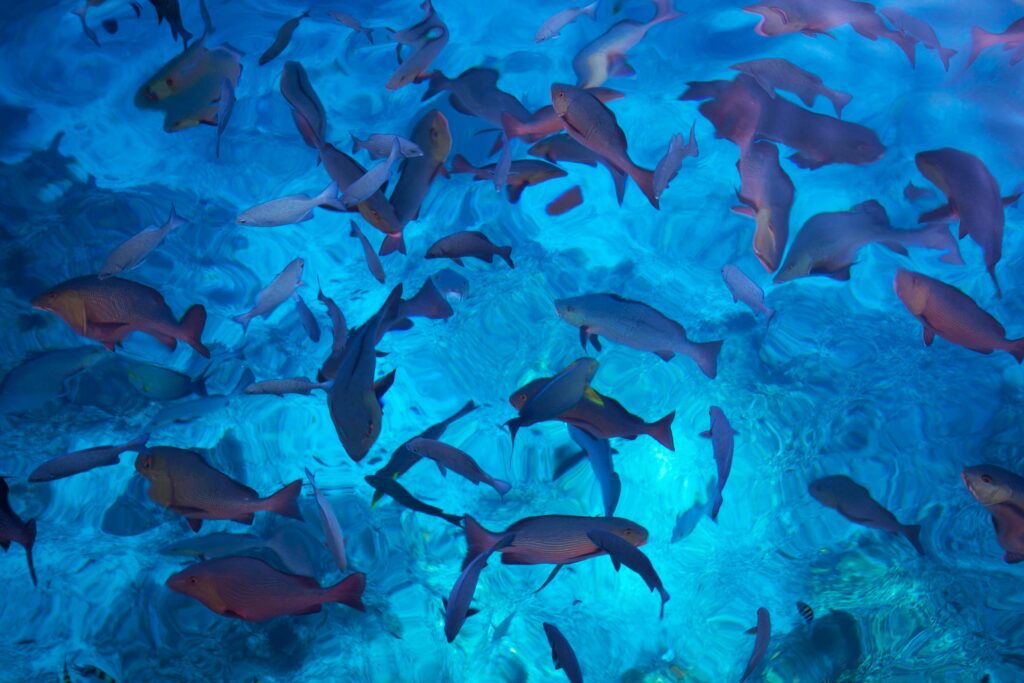
At the same time, examples of effective fisheries management quietly stood their ground. Where monitoring, enforcement, and community cooperation had been sustained over time, collapse was avoided. These successes rarely made headlines, but they mattered.
What became harder to ignore was the growing tension between adaptive ecosystems and rigid governance structures. Fish adapted. Policies often did not.
Plastic: Less Shock, More Weariness
Plastic pollution no longer shocked anyone this year. That, in itself, felt like a warning sign.
Studies continued to confirm its presence everywhere researchers looked — surface waters, sediments, deep trenches, polar ice. The novelty had worn off. What replaced it was a more troubling question: what does long-term, low-level exposure actually do?
Research increasingly shifted from counting fragments to examining biological interaction. Ingestion was no longer the only concern. Cellular stress, reproductive effects, and cumulative exposure entered the conversation.
There was progress, too. Some industries changed materials. Some regulations tightened. But the scale of existing plastic meant that even decisive action today would take years to register at sea. This temporal mismatch — immediate effort, delayed benefit — tested patience and political will alike.
Biodiversity Without a Map
This was not a good year for neat biodiversity narratives. Declines continued in many places, particularly among specialists tied to specific habitats. Elsewhere, species richness appeared to increase as newcomers arrived.
The uncomfortable truth is that biodiversity gain and loss now often occur simultaneously. Counting species became less informative than understanding function. Who eats whom. Who stabilises sediments. Who builds structure.
Ecologists spoke more often about roles than names. It was a subtle but telling shift, reflecting a world where preservation increasingly gives way to adaptation.
Coastlines Where Ecology Meets Daily Life
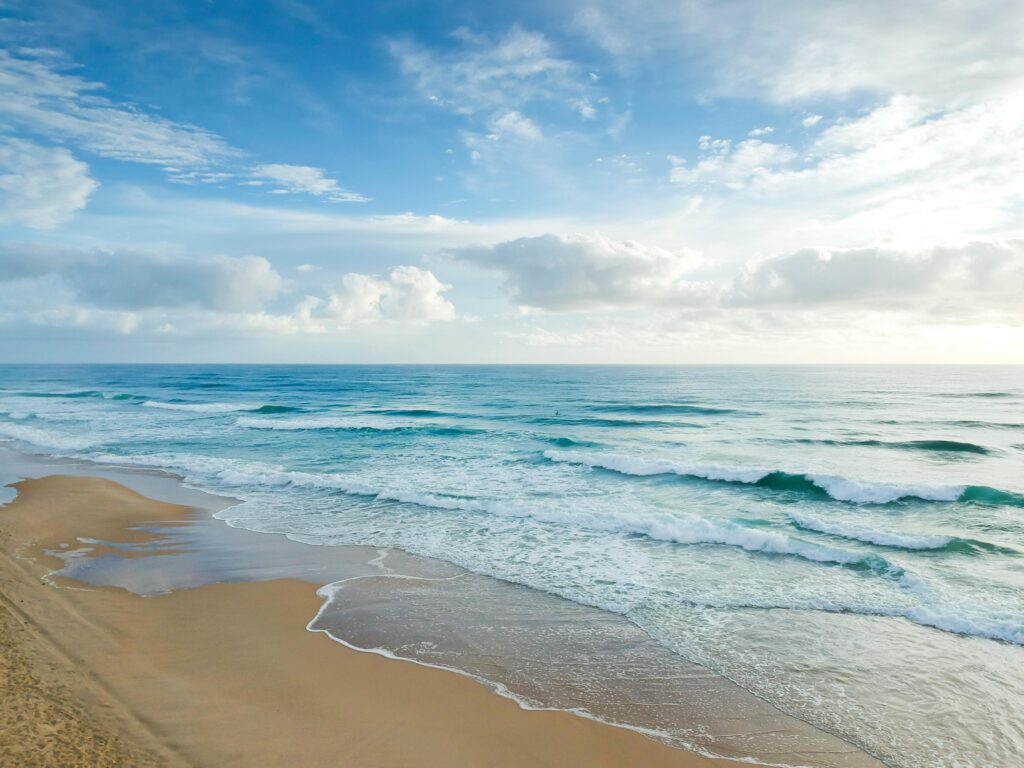
Away from datasets and models, the year unfolded differently along coastlines.
Communities dealing with erosion, flooding, or degraded fisheries experienced marine ecology not as an academic field but as a practical constraint. Some adapted quickly. Others struggled.
Where solutions worked, they tended to be unremarkable: restored wetlands, flexible zoning, small-scale protections managed locally. These projects lacked spectacle but delivered tangible benefits.
Trust mattered as much as technique. Initiatives imposed without consultation faltered. Those shaped collaboratively endured.
Technology Grows Up
Autonomous vehicles mapped areas once unreachable. Sensors streamed data continuously. Analytical tools flagged patterns no human could spot unaided.
Yet there was less techno-optimism than in previous years. More data did not automatically translate into better outcomes. The bottleneck was no longer observation, but decision-making.
Several reviews this year pointed out an uncomfortable gap: we know more than we act upon. Technology illuminated problems clearly. It did not resolve the politics around fixing them.
Protection on Paper, Reality at Sea
Marine protection targets continued to expand in theory. In practice, enforcement remained patchy.
Some protected areas functioned well, supported by funding and monitoring. Others existed largely in name. This discrepancy was not new, but it felt more consequential as pressures intensified.
Encouragingly, newer protection schemes often built flexibility into their design. Rather than fixed rules, they allowed adjustment as conditions changed. It was a small but meaningful evolution in thinking.
What This Year Leaves Behind
If this year taught anything, it is that marine ecology no longer fits comfortably into slow narratives. Change is uneven, sometimes abrupt, and often local.
There were no clean victories. There were no final defeats. There were signs of damage, of resilience, of systems bending without yet breaking.
What narrowed was the margin for delay. The ocean is still absorbing shock, still reorganising, still offering clues about what works. But it is doing so on a timetable that feels increasingly unforgiving.
The science is clearer than it was. The choices are clearer too. What remains uncertain is whether action will keep pace with understanding.
Resources & Further Reading
-
Intergovernmental Panel on Climate Change (IPCC) – Special Report on the Ocean and Cryosphere in a Changing Climate
https://www.ipcc.ch/srocc/ -
United Nations Environment Programme (UNEP) – State of the Marine Environment
https://www.unep.org/explore-topics/oceans-seas -
Food and Agriculture Organization of the United Nations (FAO) – The State of World Fisheries and Aquaculture
https://www.fao.org/fishery/en/publications/sofia -
Global Ocean Observing System (GOOS) – Ocean monitoring and climate indicators
https://www.goosocean.org -
International Union for Conservation of Nature (IUCN) – Marine and Polar Programme
https://www.iucn.org/our-work/topic/marine-and-polar -
National Oceanic and Atmospheric Administration (NOAA) – Marine heatwaves and ecosystem impacts
https://www.noaa.gov/education/resource-collections/ocean-coasts -
European Marine Observation and Data Network (EMODnet)
https://emodnet.ec.europa.eu -
Scientific Committee on Oceanic Research (SCOR) – Global marine research initiatives
https://scor-int.org