Marine Ecology News Digest — February 2026
February has been a month of quiet but meaningful shifts across marine ecology. Rather than a single defining headline, the past few weeks have revealed a pattern: incremental change, often fragile, occasionally encouraging, and always shaped by the tension between economic pressure and environmental necessity.
Below is a grounded overview of the most relevant developments — from polar science to coastal restoration — with an eye on what they might mean in practice.
A slower winter in the Arctic — but not a recovery
Data released in February shows that Arctic sea ice extent has again remained below long-term averages for this time of year. While the rate of winter ice formation appeared marginally steadier than in the unusually warm winter of 2024–25, scientists are careful not to read too much into it.
The issue is no longer just how much ice forms, but how thick and resilient it is. Much of the new ice remains thin, first-year ice — vulnerable to early melt and break-up. This has consequences beyond temperature metrics.
Marine ecosystems are directly tied to ice structure. Algae that grow beneath the ice form the base of polar food webs, supporting zooplankton, fish, seabirds, and marine mammals. When ice forms later and melts earlier, that timing shifts — and not always in a way species can adapt to.
Field teams working in the Barents and Beaufort Seas report increasing mismatches between plankton blooms and fish spawning cycles. These are subtle disruptions, but they accumulate.
North Atlantic: plankton shifts raise long-term questions
Several monitoring programmes across the North Atlantic have reported changes in plankton communities — particularly a northward movement of warmer-water species.
At first glance, this might appear to be a gradual redistribution rather than a loss. However, plankton are not interchangeable. Different species carry different nutritional value, grow at different rates, and support different food chains.
Of particular concern is the decline in certain cold-water copepods, which are a key food source for species such as Atlantic cod and herring. In their place, smaller, less energy-rich species are becoming more common.
Fisheries scientists are watching this closely. A shift at the base of the food web can ripple upwards, affecting fish growth rates, breeding success, and ultimately stock stability.
This is not a collapse. But it is a drift — and one that could reshape fisheries over the coming decade.
Coral reefs: mixed signals from restoration projects
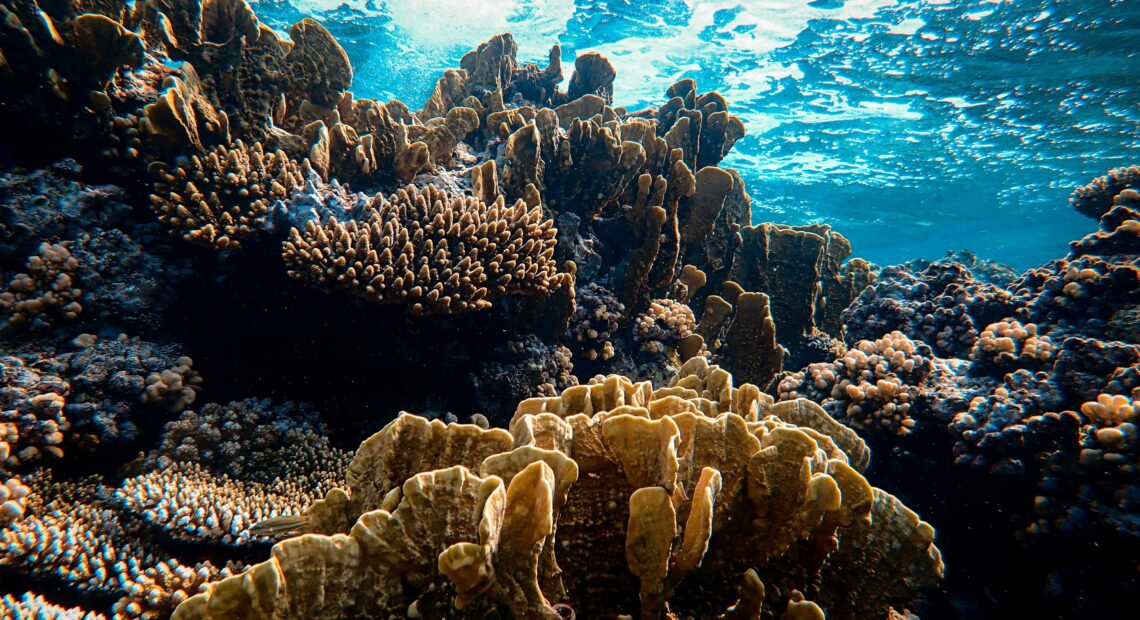
Coral restoration efforts continue to expand, with February bringing updates from projects in the Caribbean, Red Sea, and parts of Southeast Asia.
There is progress. Techniques such as coral gardening and microfragmentation are improving survival rates, and some restored sites are beginning to show early signs of structural complexity returning.
However, there is also a growing recognition that restoration alone cannot offset broader environmental stress.
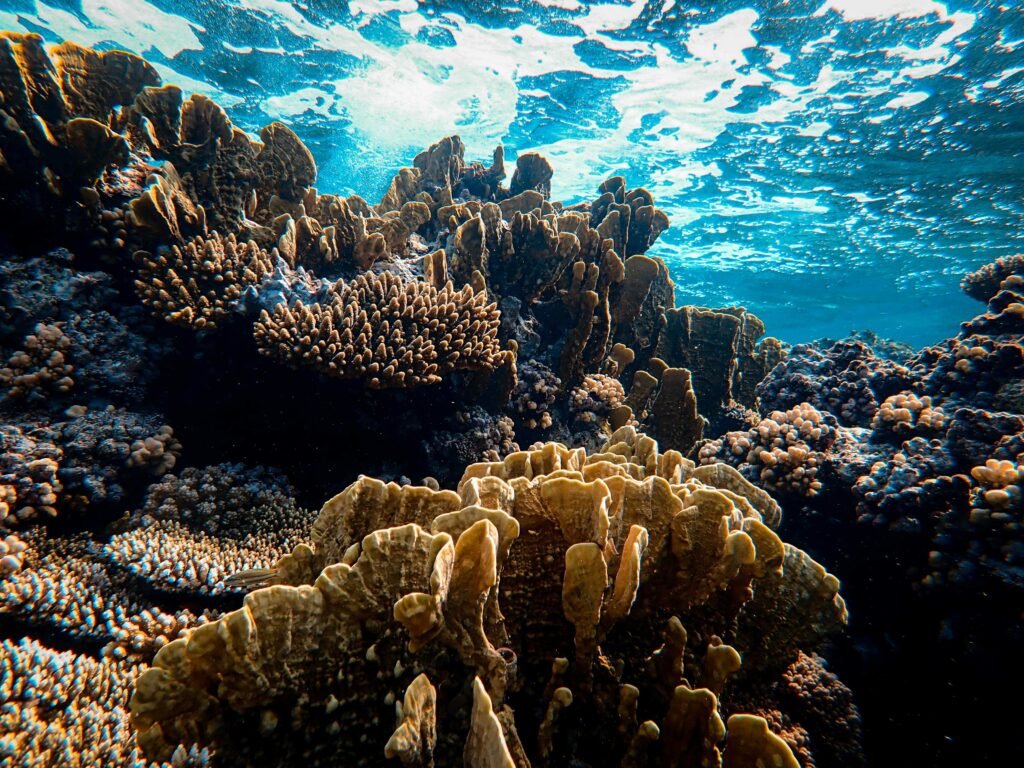
Rising sea temperatures remain the dominant pressure. Even well-established restoration sites have experienced bleaching events over the past year. In some cases, newly transplanted corals have proven more vulnerable than expected.
The conversation is shifting slightly. Restoration is increasingly seen not as a solution in itself, but as a way of buying time — preserving fragments of reef ecosystems while larger climate and water quality issues are addressed.
Seagrass and saltmarsh: steady gains in coastal projects
One of the more quietly positive trends continues to be the expansion of seagrass and saltmarsh restoration, particularly in European waters.
Projects in the UK, the Netherlands, and Denmark have reported measurable increases in seagrass coverage over the past 12 months. These habitats are often overlooked, but their ecological value is significant.
Seagrass meadows act as nurseries for fish, stabilise sediments, and store carbon at rates comparable to terrestrial forests. Saltmarshes provide natural coastal defence, absorbing wave energy and reducing erosion.
What makes these projects notable is their practicality. Unlike coral reefs or polar systems, seagrass and saltmarsh restoration can often be carried out with relatively modest resources and local community involvement.
There are still challenges — including water quality and physical disturbance — but the trajectory is encouraging. These habitats are proving that recovery is possible where pressures are managed.
Deep-sea mining: regulatory pressure builds
Debate around deep-sea mining intensified in February, with renewed calls for a precautionary pause on commercial extraction.
Several countries have reiterated support for a moratorium, citing gaps in scientific understanding of deep-sea ecosystems. The concern is straightforward: once disturbed, these environments may take centuries — if not longer — to recover.
Industry proponents argue that seabed minerals are essential for the energy transition, particularly for battery production. That tension is unlikely to resolve quickly.
What has changed is the tone of the conversation. Rather than focusing solely on economic potential, discussions are increasingly centred on ecological risk and governance.
The International Seabed Authority continues to work on regulatory frameworks, but agreement remains uneven. For now, uncertainty persists — and with it, caution from parts of the investment community.
Plastic pollution: incremental progress, uneven impact
Efforts to address marine plastic pollution continue, though progress remains uneven.
February saw further developments in international negotiations toward a global plastics treaty. While consensus has not yet been reached, there is growing alignment around the need to address production as well as waste management.
On the ground, several coastal clean-up and waste interception projects have reported measurable reductions in local plastic accumulation — particularly in river systems feeding into major marine basins.
However, the broader picture is more complex. Microplastics are now firmly embedded in marine environments, from surface waters to deep-sea sediments. Their ecological impact is still being studied, but early findings suggest potential effects on feeding behaviour and reproduction in some species.
This is a long-term issue. Even with reduced inputs, existing pollution will remain part of the marine environment for decades.
Fisheries and management: cautious adjustments
Fisheries management continues to adapt to changing environmental conditions.
In the North-East Atlantic, quota discussions have increasingly incorporated ecosystem-based considerations, including temperature trends and stock distribution shifts. While this does not eliminate conflict between economic and environmental priorities, it represents a more nuanced approach.
There is also growing use of real-time data — including satellite monitoring and electronic reporting — to support more responsive management.
One notable development is the expansion of dynamic ocean management zones, where fishing activity is adjusted based on current ecological conditions rather than fixed boundaries.
This approach is still evolving, but it reflects a broader shift toward flexibility in the face of environmental variability.
Offshore energy and marine ecosystems: closer scrutiny
The expansion of offshore wind continues across European waters, with several new projects entering construction phases.
From an ecological perspective, the conversation is becoming more detailed. Early concerns about habitat disruption and noise are now being supplemented by studies on longer-term ecosystem interactions.
There is emerging evidence that some wind farm structures may act as artificial reefs, supporting local biodiversity. At the same time, questions remain about cumulative impacts — particularly where multiple developments are concentrated in the same region.
The key issue is balance. Offshore energy is central to decarbonisation efforts, but its deployment requires careful spatial planning to minimise ecological disruption.
Looking ahead
If February has a defining theme, it is this: marine ecosystems are not collapsing uniformly, but they are shifting — often in ways that are difficult to reverse.
There are areas of progress. Coastal restoration, improved monitoring, and more adaptive management approaches are all steps in the right direction.
But these sit alongside ongoing pressures — warming waters, habitat loss, and emerging industrial activity in previously untouched areas.
The challenge is not a lack of awareness. It is coordination, timing, and the willingness to act before changes become irreversible.
References and further reading
- Arctic sea ice data — National Snow and Ice Data Center (NSIDC): https://nsidc.org
- Copernicus Marine Environment Monitoring Service: https://marine.copernicus.eu
- International Council for the Exploration of the Sea (ICES): https://www.ices.dk
- Global Coral Reef Monitoring Network (GCRMN): https://gcrmn.net
- Seagrass restoration initiatives (UK): https://www.projectseagrass.org
- International Seabed Authority (ISA): https://www.isa.org.jm
- UN plastics treaty negotiations overview: https://www.unep.org
- Marine Conservation Society (UK): https://www.mcsuk.org
- FAO Fisheries and Aquaculture updates: https://www.fao.org/fisheries
- Offshore wind and environment research (IEA Wind TCP): https://iea-wind.org