Green ports & maritime infrastructure
Green Ports Are No Longer Just About Shore Power
A modern green port strategy still needs shore power, but it also needs grid planning, vessel charging, joined-up data, cleaner dredging, climate resilience, waste reduction and space for nature. The ports that make progress will be the ones that treat decarbonisation as an operating system, not a single piece of equipment.
Short Answer
A green port is not simply a port with shore power. It is a port that reduces emissions across vessels, cargo handling, buildings, landside transport and harbour operations while also improving climate resilience, waste handling, water quality and local biodiversity.
For years, shore power has been the headline measure in port decarbonisation. It is easy to see why. A vessel alongside can switch off its auxiliary engines and plug into electricity from the quay. That can cut noise, improve local air quality and reduce emissions at berth. For communities living near busy ferry terminals, cruise berths or container ports, that matters.
But the phrase “green port” has grown bigger than the cable on the quayside. It now covers the full life of a port: the electricity network behind the berth, how trucks and terminal equipment move, how dredging is managed, how waste is separated, how storm water is treated, how port community systems reduce delay, and whether the shoreline can support wildlife rather than only hard concrete.
This shift is partly practical. Ports are being asked to serve cleaner vessels before the supporting infrastructure is fully in place. Ferry operators are looking at battery-electric and hybrid routes. Shipping lines are under pressure to report emissions more accurately. Cities want cleaner air around terminals. Regulators are moving towards tighter carbon rules. At the same time, ports are facing congestion, weather disruption, cyber risk and higher energy demand.
In other words, a modern green port strategy has to be useful on a wet Tuesday morning when a ferry is late, the grid connection is constrained, a berth is occupied, a storm is forecast, and the terminal still has cargo to move.
What A Green Port Strategy Now Includes
A good green port plan starts with a clear question: where does the port have direct control, where does it influence others, and where does it need partners?
Some emissions come from port-owned assets such as buildings, harbour craft, vehicles and lighting. Others come from tenants, terminal operators, visiting ships, trucks, rail, ferries and service suppliers. A port authority may not own every activity on its estate, but it can still shape standards through leases, incentives, infrastructure, data-sharing and planning decisions.
For a port operator, the modern checklist usually includes:
The important point is that these measures need to work together. Installing shore power without checking grid capacity can create an expensive bottleneck. Building electric ferry charging without agreeing schedules and connection standards can leave operators with stranded kit. Collecting emissions data without turning it into decisions can become a reporting exercise and little more.
Shore Power Still Matters, But It Is Only The Front Door
Shore power remains one of the most visible ways to reduce emissions at berth. It is especially useful where vessels call regularly, stay long enough to make connection worthwhile, and can be fitted to receive power safely. Ferries, cruise ships, offshore support vessels and some container services can all be candidates, depending on the route and berth pattern.
The challenge is not only technical. Ports have to consider who pays for the berth equipment, who pays for vessel retrofits, how electricity is priced, whether the power is genuinely low carbon, and how connection time fits into commercial operations. A system that looks convincing in a press release can still fail if it is cheaper or easier for vessels to keep burning fuel at berth.
Cleaner Seas has already covered this tension in its report on ferry emissions and the charging infrastructure gap. The story is worth reading because it points to the practical issue beneath the environmental one: ferry electrification cannot move faster than port power, grid reinforcement, route planning and commercial confidence.
Grid Capacity Is Becoming A Boardroom Issue
If shore power is the visible part of the system, grid capacity is the part that decides how far the plan can go. A busy port may need electricity for vessel hotel loads, ferry charging, electric cranes, reefer containers, warehouses, lighting, on-site vehicles and, in time, alternative fuel production or storage.
That demand will not arrive evenly. Ports have peaks. A ferry may need a large amount of power in a short turnaround. A cruise vessel may need hotel load support for hours. A container terminal may have several electric assets drawing power during the same operating window. The port cannot simply ask for “more green electricity” and hope it arrives when needed.
Modern green port planning therefore has to include:
- Forecasts of future electrical demand by berth, tenant and vessel type.
- Early discussions with network operators and local authorities.
- Options for battery storage, smart charging and on-site renewables.
- Clear rules for which users get priority when capacity is limited.
- Commercial models that make plugging in attractive rather than symbolic.
A harbour authority comment we hear often, in one form or another, is that the easiest part is buying the visible equipment. The harder part is aligning power contracts, planning permission, grid lead times, berth availability and vessel investment. That is why a credible green port strategy has to be phased. It should show what can be done now, what needs grid reinforcement, and what depends on customer demand.
Charging Is Not Just For Ships
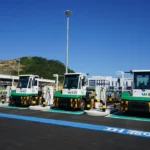
Green ports also need to think about the movement around the ship. Cargo handling equipment, terminal tractors, vans, staff vehicles, buses, port service craft and visiting lorries all shape local emissions. A port can make progress by electrifying its own fleet, but it should also make room for tenants and transport partners to do the same.
This is where city authorities become important. A port does not sit outside the city just because it has a fence around it. Roads, substations, planning rules, air quality targets and public transport links often sit with local or regional bodies. If port charging is planned without city energy planning, both sides can end up competing for the same constrained grid capacity.
For infrastructure suppliers, this creates a need for practical, modular solutions. Ports may not want to commit immediately to permanent equipment at every berth. In some cases, mobile shore power units, battery containers, temporary charging, staged cable routes or shared charging hubs may help bridge the gap between pilot and full rollout.
Port Community Systems Can Cut Waste Before A Cable Is Plugged In
Not every green port measure looks like a piece of heavy equipment. Some of the best gains come from reducing avoidable waiting and movement.
A port community system connects the people and organisations involved in a port call: shipping lines, agents, terminals, hauliers, customs, pilots, tugs and authorities. When the system works well, it can reduce duplicate paperwork, improve arrival planning, smooth truck flows and help vessels time their approach more efficiently.
UNCTAD has warned that ports are under strain from disruption, congestion and longer waiting times, and has pointed to digital systems as one way to improve efficiency and transparency. That matters for green port strategy because delay has an emissions cost. A vessel waiting outside a port, a truck queueing at a gate, or a crane standing idle because information is missing all represent wasted fuel, time and money.
The green port question is not simply “Do we have software?” It is “Does our data change behaviour?”
Useful port data should help teams answer practical questions:
- Which berths create the highest emissions at berth?
- Where are trucks waiting longest?
- Which vessel types are ready for shore power or charging?
- How much of the port estate’s energy demand is predictable?
- Where do weather events cause repeat disruption?
- Which environmental incidents are recurring rather than isolated?
This is also where emissions data becomes more useful. Annual reporting is necessary, but monthly or operational data is what lets managers act. If a terminal can see that a particular process creates repeated peaks in fuel use or congestion, it can redesign the process. If a port can show suppliers where demand is coming from, it can make better investment cases.

Dredging Has To Be Part Of The Conversation
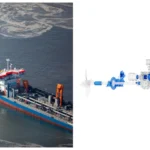
Dredging is rarely the public face of green port strategy, but it should not be left out. Ports need safe channels, turning circles and berths. Sediment moves, vessels change, and access has to be maintained. The environmental question is how that work is planned, monitored and communicated.
Dredging can disturb habitats, release contaminants from sediment, affect water clarity and alter local ecology. That does not mean dredging is automatically irresponsible. It means it needs careful assessment, timing, sediment testing, monitoring and, where possible, beneficial reuse.
Some ports are exploring ways to use dredged material in habitat creation, flood defence or land restoration. Others are improving turbidity monitoring, avoiding sensitive breeding seasons, or using more precise dredging methods. The green port mindset is not “never dredge”; it is “dredge only as needed, understand the ecological cost, and look for a better destination for the material than disposal by default.”
This links directly to environmental compliance. A port that can explain how it monitors sediment, protects habitats and reports incidents will be in a stronger position with regulators, communities and customers.
Waste And Water Are Still Core Port Issues
A port can invest heavily in clean power and still fall short if waste and water are poorly managed. The basics matter: reception facilities, oily waste handling, ballast water awareness, spill response, plastic reduction, stormwater drainage, ship-generated waste, recycling, and clear rules for tenants and visiting vessels.
Good waste systems are usually boring in the best possible way. They are visible, easy to use, consistently monitored and backed by contracts that do not reward the wrong behaviour. If bins are badly placed, signage is unclear or waste contractors are not measured, the policy will not hold.
Water management deserves the same practical attention. Ports handle fuel, cargo residues, cleaning products, metals, dust and run-off from hard surfaces. Heavy rain can move pollutants quickly if drainage is not designed and maintained well. Climate change adds pressure because intense rainfall and storm surge can overwhelm old assumptions about capacity.
Climate Resilience Is Now Part Of Being Green
A port that cannot operate safely during heat, flooding or stronger storms is not resilient, however clean its power supply may be. Climate resilience is now part of environmental performance because disruption pushes costs and emissions elsewhere. If a berth closes, cargo may be rerouted. If a road floods, trucks idle or travel further. If equipment overheats, productivity drops.
Resilience planning should look at quay levels, drainage, wind exposure, heat stress, power supply, emergency access, insurance, tenant continuity and safe working conditions. It should also include the surrounding city. Ports often sit in low-lying coastal zones, close to communities that face the same flood and air quality risks.
Cleaner Seas’ article on Orkney Harbour’s green energy and clean fuel initiatives is a useful reminder that ports can act as local energy and innovation hubs, not only transport gateways. For smaller and regional ports, that role may become one of their strongest advantages.
Biodiversity Should Not Be An Afterthought
Ports are working places, but they are also coastal habitats. Sea walls, mudflats, saltmarsh, seagrass beds, intertidal zones, breakwaters and sheltered water can all support life if they are managed with care.
Biodiversity work does not have to be decorative. It can support flood protection, improve water quality, strengthen licence applications, build community trust and give port teams a clearer picture of local ecological health. Examples include habitat panels on sea walls, native planting, managed realignment, seagrass or saltmarsh restoration partnerships, bird monitoring, invasive species controls and lighting designed to reduce disturbance.
The strongest biodiversity plans are tied to evidence. Baseline surveys, regular monitoring and transparent reporting are better than vague claims about being nature-positive. A port does not need to pretend it is a nature reserve. It does need to understand the habitats it affects and show how it is reducing harm and creating room for recovery where possible.
A Visual Checklist For Port Teams
Power
- Map future vessel and landside electricity demand.
- Check grid capacity before announcing full electrification targets.
- Plan shore power and charging around real berth use.
Operations
- Use port community systems to reduce waiting and wasted journeys.
- Track emissions by activity, not only by annual totals.
- Include tenants and transport partners in the plan.
Environment
- Review dredging, sediment, water and waste risks together.
- Build climate resilience into asset planning.
- Measure biodiversity before claiming improvement.

What This Means For Different Port Stakeholders
For port operators
Start with a phased estate-wide plan. Separate quick wins from grid-dependent investments. Build the business case around air quality, operational efficiency, customer demand, regulation and resilience, not carbon alone.
For ferry operators
Bring ports into vessel planning early. Battery size, turnaround time, berth allocation, route reliability and charging standards all need to be discussed before procurement decisions are locked.
For infrastructure suppliers
Ports need credible staged options. The winning suppliers will not only sell equipment; they will help ports understand load profiles, maintenance, safety, interoperability, data and future expansion.
For city authorities
Treat the port as part of the city’s clean energy and resilience system. Road access, grid reinforcement, planning, air quality, skills and flood protection are shared issues.
Frequently Asked Questions
What is a green port?
A green port is a port that actively reduces environmental harm across its operations, tenants, vessels, landside transport, waste streams, water management and estate planning. It should also improve resilience to climate risk and protect or restore local biodiversity where possible.
Is shore power enough to make a port green?
No. Shore power can reduce emissions at berth, but it does not address cargo handling, trucks, dredging, waste, water quality, climate resilience, biodiversity or the wider energy system behind the quay.
Why is grid capacity such a big issue for ports?
Ports are likely to need much more electricity for shore power, ferry charging, cranes, vehicles, buildings and future fuels. Without early grid planning, ports may install equipment that cannot be used at the scale or speed operators need.
How can port community systems support sustainability?
They can reduce waiting, duplicated paperwork, truck queues and inefficient vessel calls. Better information helps port users plan arrivals, berth use and cargo movements with less wasted fuel and time.
Where should a port start?
Start with a baseline: emissions, energy demand, grid constraints, waste streams, water risks, dredging impacts, climate exposure and biodiversity. Then choose a small number of high-impact projects that can be measured and repeated.
Useful Sources And Further Reading
Sponsor Or Contribute To A Cleaner Seas Green Ports Feature
Cleaner Seas is looking for practical examples from ports, ferry operators, infrastructure suppliers, energy partners and environmental specialists. If your organisation is working on shore power, port charging, emissions data, dredging, waste reduction, climate resilience or biodiversity, this is the kind of story our readers need.