PortXchange says measuring emissions isn’t enough
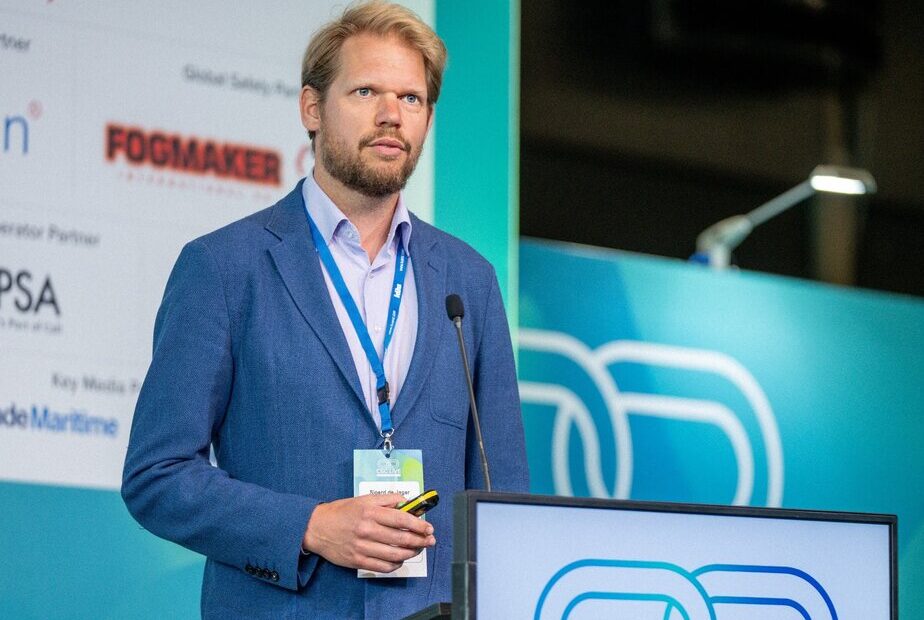
PortXchange expands EmissionInsider with new multimodal monitoring, emissions forecasting and scenario modelling features to help ports make better operational and investment decisions.
(ROTTERDAM, 2 November 2026) — Ports have spent years improving how they calculate and report emissions. But knowing how much a port emitted last year does little to guide tomorrow’s investment decisions.
That frustration has emerged repeatedly in PortXchange’s conversations with ports seeking better ways to manage their environmental impact. They want to understand emissions across their operations, anticipate future changes and assess the consequences of major investments.
PortXchange is responding by expanding EmissionInsider, with new features coming to the platform including multimodal emissions monitoring, emissions forecasting, scenario modelling and AI-assisted decarbonisation planning. Ports’ practical needs are shaping these developments, as they want to use emissions information to guide operational and investment decisions.
Sjoerd de Jager, Managing Director & Co-Founder of PortXchange, believes the industry has spent too long treating emissions reporting as the end of the process rather than the starting point.
“Ports have become much better at measuring emissions, but measuring them doesn’t make them disappear.”
de Jager said.
“If the information sits in a report that nobody uses when making operational or investment decisions, we have to question what we’re achieving. Ports need to know where they can make a difference, what it will cost and whether their plans will actually reduce emissions.”
Eugene Sypachev, Head of Engineering at PortXchange, is leading the development programme and sees a need for closer cooperation between sustainability teams and those responsible for daily port operations.
“In most ports today, sustainability and operations run as separate conversations. One team owns the annual number, the other owns the daily throughput target, with little shared data connecting the two.”
said Sypachev.
“We want to give people across the port a clearer picture of operational activity and its emissions consequences, so environmental performance can be considered when decisions are made rather than assessed afterwards.”
Looking beyond vessel emissions
Much of the maritime industry’s attention has focused on vessel emissions, but ships are only part of a port’s environmental footprint. Trucks, rail movements, and cargo-handling equipment also contribute, and many ports still struggle to understand their combined impact.
PortXchange is developing EmissionInsider’s multimodal capabilities to bring these sources together, giving ports a clearer view of which activities drive most emissions and where reductions are possible. The company is among a relatively small group of technology providers pursuing emissions monitoring across multiple transport modes.
The expanded platform is being organised around four connected products: Emission Report, Emission Dashboard, Emission Simulations and Emission Strategy.
The Emission Report will provide structured emissions reporting for ports with different levels of data availability. Emission Dashboard will support more regular monitoring of port activity and emissions, helping sustainability and operational teams follow changes in performance and measure progress against their targets.
Understanding what comes next
Many planned capabilities come directly from discussions with ports that want to understand how changes in traffic, operating conditions, and future investments could affect emissions.
The forecasting capabilities will help ports anticipate short-term emissions changes. For example, weather disruptions or changes in vessel schedules can increase waiting times at berth or anchorage and lead to additional emissions. Using vessel movement information and emissions calculations, the platform aims to give ports a clearer picture of the potential environmental impact of these changes.
For longer-term planning, Emission Simulations will allow ports to examine the likely effects of different decisions before committing resources. Scenarios could include introducing shore power, electrifying port equipment, changing vessel speed limits or preparing for higher traffic volumes.
De Jager added:
“Ports are under pressure to spend millions on decarbonisation, but how many can confidently say which investments will make the biggest difference? We cannot keep asking ports to make expensive decisions based on assumptions. They need evidence before the money is spent.”
Different ports, different priorities
Emission Strategy will introduce AI-assisted support for ports developing or reviewing their decarbonisation plans. It is being designed to help sustainability teams consider relevant measures and establish priorities based on their port’s operations, emissions profile and objectives.
For some ports, the immediate priority is establishing a reliable emissions baseline. Others already have detailed reduction targets but need to understand how planned investments or operational changes could help them meet those commitments.
“Every port’s journey starts in the same place: reporting, driven by regulation or by community demand for transparency. What comes next is where ports diverge.”
Sypachev explained.
“A smaller port with limited resources may need help establishing its first reliable emissions baseline. Another may already have a detailed decarbonisation plan but need better information about which investments will deliver results. We are developing EmissionInsider to support those different needs rather than expecting every port to follow the same path.”
The new features will be introduced progressively, allowing ports to build on their existing emissions reporting capabilities as their requirements develop. EmissionInsider’s modular design means ports can select the products they need, with configurations and data integrations tailored to their operations and decarbonisation priorities.
For more information about EmissionInsider, visit https://port-xchange.com/emissioninsider/
For interviews or more information, please contact:
Sue Terpilowski
sue@imageline.co.uk
Vy Le
pr@imageline.co.uk
About PortXchange
PortXchange is a Rotterdam-based maritime technology company accelerating port decarbonization through data-driven action.
Its flagship product, EmissionInsider, enables ports to monitor, analyze, and reduce Scope 1, 2, and 3 emissions in real time, providing full visibility across ship, truck, rail, and terminal activity. The platform includes a standalone Port Emissions Reporter, designed to turn complex emissions data into strategic, regulatory-ready insights.
PortXchange also offers Synchronizer, a collaborative planning tool that helps reduce vessel idle time and optimize port calls through a Just-in-Time (JIT) smart system that facilitates coordination between ships, terminals, and service providers.
As a B Corp-certified company, PortXchange is committed to partnering with forward-thinking ports and maritime companies to replace data paralysis with emissions accountability, proving that climate action starts with operational decisions.
Custom Digital Solutions
In addition to its core platforms, PortXchange develops custom digital solutions tailored to the operational realities of ports, terminals, and inland operators. Rather than introducing generic tools, these solutions are designed around the systems, workflows and data already used by each organisation, integrating directly through APIs or existing platforms. One example is ETAPredictor, an AI-based engine that continuously recalculates vessel arrival times using real-time operational data. Originally developed for a large inland barge operator managing thousands of vessels, the tool replaced static ETA estimates with dynamic predictions, significantly improving planning accuracy, asset utilisation, and operational decision-making.
Learn more at: www.port-xchange.com